A Quiet Photo-Viewing Break on a Commute
A quiet photo-viewing break on a commute can reveal what a saved image leaves out, helping you notice absence without inventing a backstory.
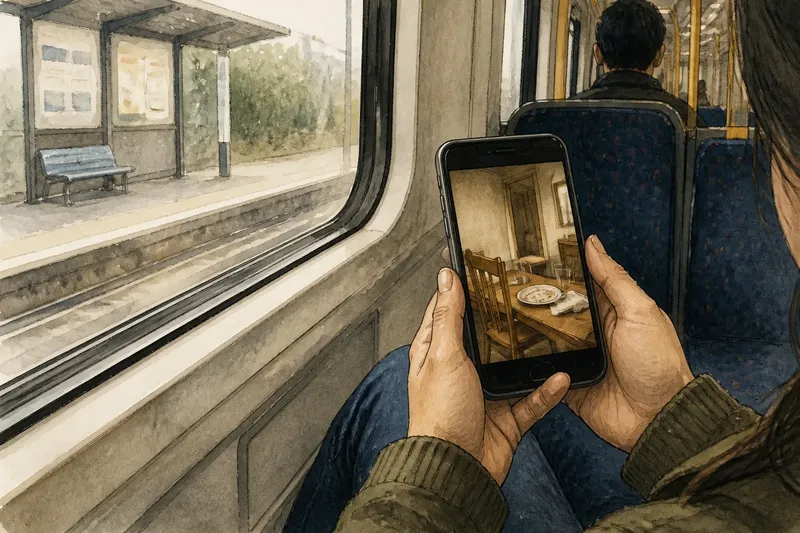
A photograph of an empty chair can follow you through a train ride without explaining who used to sit there. A quiet photo-viewing break on a commute gives that absence a little attention, while leaving the missing person and their story unresolved.
Choose a photograph with room around its subject
Pick an image already saved on your phone: a cleared dinner table, a vacant bus stop, a room after people have left, or a doorway with no one in it. These photographs have visible traces of use, but do not disclose everything that happened before or after the shutter clicked.
Put the image in a favorites album or a small folder so you can open it without scrolling through unrelated pictures. If it feels private, or if viewing it in public would be uncomfortable, choose another image. A commute is a poor place to discover that your camera roll has opinions about timing.
Look only when the route allows it. Keep your attention on platforms, stairs, crossings, and other people around you. If the vehicle is crowded or you need to watch where you are going, lock the phone and leave the photograph for later.
Read the empty space as part of the frame
Make three short passes through the image. The first is for its arrangement: where the open space sits, which objects border it, and what draws your eye. The second is for residue: a cup ring, a folded napkin, a curtain left open, a scuff on the floor. The third is for the frame’s limits: what the crop cuts off and what remains outside the photograph.
This is less like solving a clue than checking what remains on a desk after someone has cleared it. The objects can suggest prior activity, but they do not identify who was there or why the space is empty. A photograph records a selection, not the whole room or the events around it.
- If the empty area has visible traces beside it, notice one trace and then keep the rest of the scene in view; if it feels emotionally charged, close the image and choose a less personal one another time.
- If the crop cuts off a doorway, table edge, or figure, mark that boundary as missing context; if you catch yourself filling it with a definite story, return to what the frame actually shows.
- If the picture contains no obvious sign of use, notice the vacancy itself without treating it as evidence of a departure; if nothing holds your attention, put the phone away.
- If another person can see the screen, angle it away or close the image; if privacy is not possible, wait until you are somewhere more comfortable.
- If the journey requires your attention, lock the phone and look up; if the route settles later, resume only if it feels safe and convenient.
- If the photograph brings up an unwelcome memory, close it rather than pressing on; if you want to continue another day, choose an image that feels easier to sit with.
What can the missing context tell you?
Can an empty room show that someone has left?
It shows an unoccupied room at the moment represented, not why it is empty or who was there before. The distinction matters because the photograph preserves a scene while leaving its surrounding events out.
What should I look for in an abandoned photograph?
Look for visible traces such as worn surfaces, objects left behind, or a space arranged for use. Treat them as details in the frame, not as a complete account of the people or events connected to them.
Should I revisit the same image?
You can return to it if the repetition feels useful and voluntary. If the image feels stale or distressing, choose another or stop; no photograph requires a second visit.
Is it useful to make a note?
If you want to remember what caught your eye, write a brief phrase such as “empty chair, worn arm, window cropped.” Keep the note descriptive, so it records the image’s traces without quietly turning them into a biography.
Let one invented scene stay unfinished
Say you have saved a hypothetical photograph of a kitchen table: one plate, a glass ring, and an empty chair near the edge of the frame. On the first pass, you notice the chair and the space around it. On the second, you see the ring and a folded napkin. On the third, you notice that the photograph cuts off the doorway. The resulting account is modest: a place setting and an incomplete view, with no answer about who was there or what happened next.
When your stop arrives, close the image and look up. You do not need to add a caption, share the photograph, or decide what the empty space means. A quiet photo-viewing break on a commute can leave you with one useful distinction: what the image preserves, and what it has no way to tell you.