The Empty Chair Is Not an Empty Photograph
An empty chair photograph can direct attention through framing, contrast, and scale. Learn to shape the image while leaving its unseen history open.
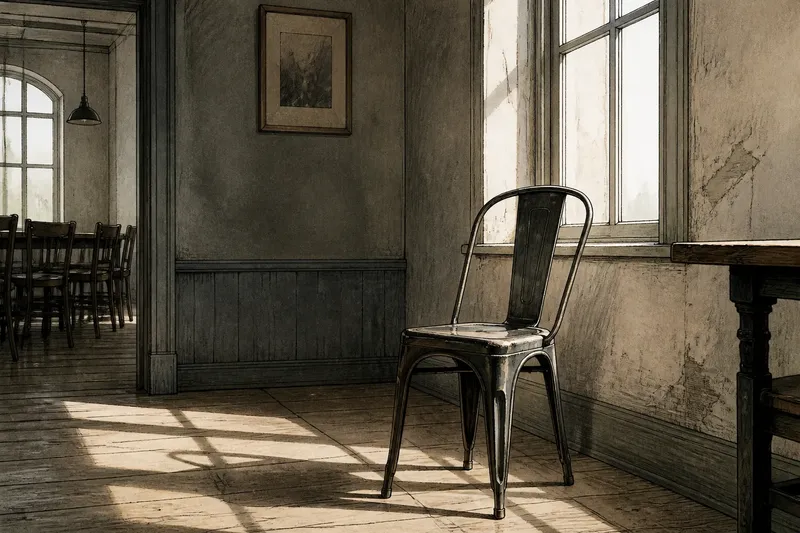
What should an empty chair photograph make you notice first? The seat’s worn surface, its angle beside a window, or the broad floor left open around it? Framing can rank those details, but the photograph cannot identify who used the chair or explain why it is empty.
The chair is not merely a stand-in for a missing person. It is a physical object with a position, surface, and relation to its surroundings. Those particulars give a photographer something precise to arrange, without requiring a backstory to make the image hold attention.
Start with the chair’s physical details
Look for visual features that belong to this chair: chipped paint, a bent metal back, a cushion with a sharp seam, or legs that interrupt the floor’s pattern. These details distinguish an image about a particular object from a generic symbol of vacancy.
Choose a viewpoint that makes the feature legible. A low angle may clarify the chair’s silhouette against a wall; a position above the seat may reveal its surface and the space inside its frame. The choice changes what the viewer can see, not what the chair means.
Use the surroundings as visual material
A nearby table, a row of benches, or a strip of window light can give the chair a relationship within the frame. Repeated seats make an interruption visible; a doorway can establish where the chair sits. These are compositional facts, not explanations of who was expected to occupy it.
Keep surroundings that help the viewer compare, locate, or distinguish the chair. If a bright sign pulls attention away from the seat, shifting your position may reduce its prominence. If a cropped tabletop makes the chair seem connected to the room, keep it. The frame need not exclude every incidental object; it needs a clear visual priority.
Let contrast clarify the subject
Contrast may come from tone, texture, shape, or spacing. A pale seat against a dark wall catches the eye; one chair turned differently among aligned chairs makes a pattern easier to read. A rough cushion beside a smooth floor can make surface more important than the open seat.
These choices influence attention, much as a lamp on a desk makes one patch of paper easier to read without changing the words written there. Contrast can make an arrangement emphatic. It cannot turn a tidy chair into proof that someone deliberately placed it there.
Choose a composition that fits what you can show
Decide whether the image is mainly about form, relations among objects, or the chair’s scale within a room. Then choose distance and framing to support that emphasis. A close view can show chipped paint; a wider view can show the chair beside a long counter. Neither view supplies the history behind those visible facts.
Say you are photographing a metal chair beside a tall window, and the bright window overwhelms the seat. You move a step to the side until the chair’s dark outline separates from the window frame, then tighten the composition to exclude a distracting sign. The resulting image makes the chair’s angular shape easier to see; it still cannot say who sat there.
- If the chair’s outline merges with the wall, then change your angle; if it remains unclear, choose a background with stronger tonal separation.
- If a nearby object helps locate the chair, then keep it in frame; if it competes for attention, shift position to reduce its prominence.
- If repeated seats create a clear pattern, then include enough of them to show the repetition; if one seat becomes the subject, frame it so the pattern does not overwhelm it.
- If the seat’s material or wear matters, then move closer; if the room’s proportions matter more, step back and retain the surrounding architecture.
- If a bright patch draws the eye away from the chair, then reframe or change position; if the patch helps separate the chair, keep the contrast.
- If the chair’s direction is visible, then treat it as a compositional line; if you are tempted to infer a person’s intention from it, describe only the direction and position.
What does an empty chair photograph show?
Does an empty chair photograph show that someone left?
It shows a chair without an occupant at the moment of exposure. A departure is one possible story, but the frame alone does not establish it.
Should the chair be centered in the frame?
Center it when its shape or presence should dominate. Place it off-center when a relationship to a doorway, table, or row of seats matters more.
Can a photograph evoke loneliness?
Isolation, scale, and contrast can encourage that response. The feeling belongs partly to the viewer, and the photograph does not establish the emotional state of anyone connected to the chair.
Keep the image specific and its history open
An empty chair photograph becomes more particular when it attends to a surface, angle, pattern, or relation that could only belong to this frame. Use the main search phrase as a practical question while composing: what does this empty chair photograph let the viewer see clearly? The answer can be exact, even when the reason for the vacancy remains unknown.